

Mock Interviews
Securing a role in the IT industry involves more than just academic qualifications or technical expertise—it requires demonstrating your capabilities effectively during the interview process. For many candidates, the interview is a one-time opportunity to showcase what they’ve learned throughout their educational and professional journey.
However, succeeding in the first attempt can be challenging without proper preparation. Interviews are high-pressure environments that test not only your knowledge but also your communication, problem-solving, and interpersonal skills.
Mock interviews play a critical role in helping candidates prepare. They simulate real interview scenarios, allowing individuals to practice articulating their thoughts, receive constructive feedback, and build the confidence needed to perform well under pressure.
At Motive Square, we recognize the value of thorough preparation and support aspiring professionals through structured mock interview sessions. This not only enhances their readiness but also significantly increases their chances of succeeding in their first attempt.
Preparation is key—and mock interviews make a measurable difference.
Interview process
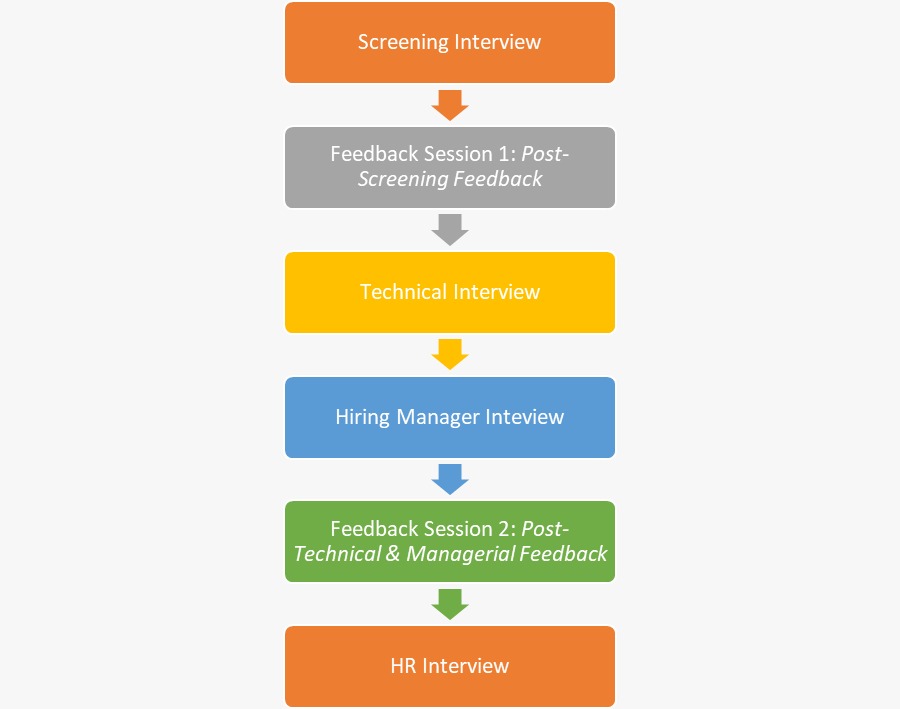
- Screening Interview
This initial step is often conducted by a recruiter or HR representative. The focus is on evaluating your resume, understanding your background, career goals, and assessing whether your profile aligns with the role. It’s also an opportunity to clarify basic qualifications and logistical details such as availability and salary expectations.
2. Feedback Session 1: Post-Screening Feedback
After the screening interview, candidates receive feedback on their profile match, communication skills, and overall fit for the role.
Advantages:
- Helps you understand how your resume and first impression are perceived.
- Offers guidance on how to improve communication and positioning in future rounds.
- Clarifies any skill or experience gaps early in the process.
3. Technical Interview
In this round, you’ll be evaluated on your core technical skills relevant to the position. This may include coding challenges, system design discussions, or domain-specific problem-solving. The goal is to assess your technical depth, problem-solving ability, and how you approach challenges.
4. Hiring Manager Interview
This stage involves a conversation with the hiring manager or team lead. Beyond technical competency, the focus here is on your ability to work within a team, take ownership, and align with the team’s working style and goals. This round often involves scenario-based questions to assess leadership, communication, and decision-making.
5. Feedback Session 2: Post-Technical & Managerial Feedback
This session is provided after the technical and hiring manager interviews. It includes input on your problem-solving abilities, collaboration potential, and team compatibility.
Advantages:
- Offers detailed insights into your technical strengths and areas for development.
- Helps you understand how your interpersonal and professional qualities were perceived.
- Prepares you better for future interviews—even if the outcome is not an immediate offer.
6. HR Interview
The final stage is usually conducted by the Human Resources team. It focuses on company culture fit, career aspirations, values, and final negotiations. This is also where employment terms, benefits, and other administrative details are discussed.